
Spinal decompression is an FDA-cleared, non-surgical therapy that relieves pain by gently enlarging the space between the discs in your spine. The negative pressure created during treatment can help take pressure off compressed nerves, allowing herniated and bulging discs to gradually move back toward their normal position. For patients throughout the Summerville, SC area dealing with degeneration, arthritis, or nerve root pressure, decompression is one of the most effective non-surgical options available.
What Result Should I Expect?
Many patients begin to notice relief within the first several sessions, and it’s common to see meaningful improvement over the course of a full treatment plan. Each session typically runs 25 to 30 minutes, with most patients completing a series of daily sessions over several weeks — the exact number depends on whether you’re dealing with a herniated disc, a degenerated disc, or a posterior facet issue, which your provider will walk you through during your evaluation.
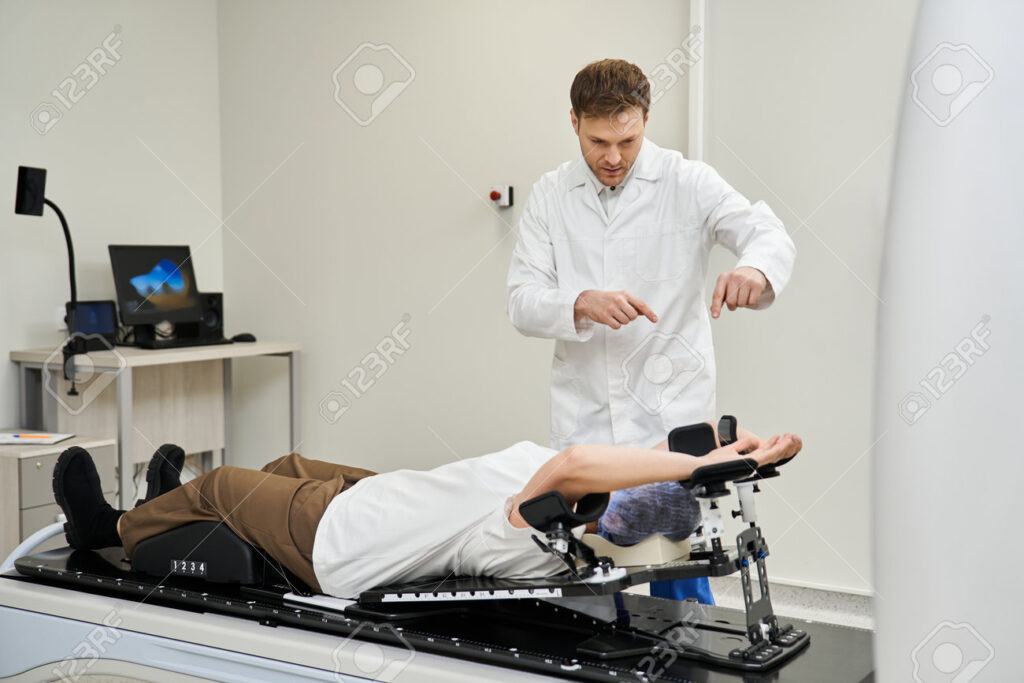
Who can benefit from using Disc Decompression Therapy?
You may be a good candidate for spinal decompression if you’re dealing with pain from a herniated or bulging lumbar disc that’s lasted more than four weeks, recurring pain from a prior back surgery, or persistent pain from degenerated discs that hasn’t responded to a few weeks of other therapy. It’s also worth considering if you’ve tried physical therapy and chiropractic care without relief and are weighing surgery as a next step — decompression is typically worth a trial before more invasive options.
- Pain due to herniated and bulging lumbar discs that is more than four weeks old;
- Recurrent pain from a failed back surgery that is more than six months old;
- Persistent pain from degenerated discs not responding to four weeks of therapy;
- Patients available for four weeks of treatment protocol; and
- Patient at least 18 years of age.
These indications are ideal candidates for enrollment into our program and have the potential of achieving quality outcomes in the treatment of their back pain:
- Nerve Compression
- Lumbar Disorders
- Lumbar Strains
- Sciatic Neuralgia
- Herniated Discs
- Injury of the Lumbar Nerve Root
- Degenerative Discs
- Spinal Arthritis
- Low Back Pain w/ or w/o Sciatica
- Degenerative Joint Disease
- Myofasctois Syndrome
- Disuse Atrophy
- Lumbar Instability
- Acute Low Back Pain; and
- Post-Surgical Low Back Pain.
Lastly, the system should be utilized with patients with low back pain, with or without radiculopathy who have failed conventional therapy (physiotherapy and chiropractic) and who are considering surgery. Surgery should only be considered following a reasonable trial of Decompression therapy protocols.
How long before a patient experiences change?
Often times a patient experiences some relief within the first few (3-7) treatments. Usually by the 12th to 15th treatment all patients have reported some remission of symptoms. Patients not showing significant improvement by the 15th to 18th session may be referred for further diagnostic evaluation.
Does Decompression Therapy work for everyone?
Eighty-to-ninety percent of patients who have been properly selected and comply with the Spinal Disc Decompression protocol will have good-to-excellent outcomes. Patient’s conditions that do not respond quickly to the therapy are often unable to be helped by anything quickly. Patients vary in age, sex and body morphology and may require counseling in weight loss, nutrition and other lifestyle changes.
ULTRASOUND
One of the most common and effective therapeutic modalities is ultrasound. Ultrasound is one of the deepest forms of heat, with penetration (1-5 centimeters) to where the muscles meet the bones. A wide range of injuries can be treated with ultrasound, from simple sprain strains, to narrow tendon tears. By creating permanent, physical changes, ultrasound works to increase blood flow, repair soft tissue damage and decrease scar tissue formation.
ELECTRICAL STIMULATION
We utilize electrical muscle stimulation (EMS) on a regular basis as part of a patient’s treatment in our clinic. EMS works by sending safe, gentle electrical impulses to muscles. By causing the muscle to expand and contract, signals can be simulated as though the brain is producing them. These signals in turn, force the brain to produce natural endorphins and enkephalins and cause immediate pain relief. We recommend the use of this type of modality to aid in the rehabilitation of muscles following injury and to ease chronic muscle spasms and pain. By increasing blood flow to and from muscles, the stimulation acts as a pump, helping to remove lactic acid, a common waste product found in overused or damaged muscles. This type of stimulation also serves to increase blood flow to and from the muscles, reducing edema (inflammation) and promoting quicker recovery.